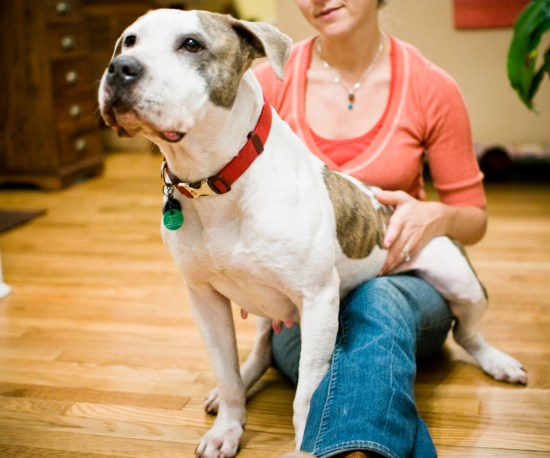
Lollie’s friends and fans offer a lot of questions and suggestions like “you seem so happy together, don’t you think you should just adopt her?” And I admit, this seems very logical. Especially when her silly little booty is snuggled up to my hip as I type, she snores softly at my side, and she occasionally stirs—not enough to entirely wake up, but enough for her eyes to flutter and for her tongue to give my pant leg a few heartfelt licks. As much as we are going to miss this sweet girl when she goes, there are a few key reasons that she won’t be our foreverdog.
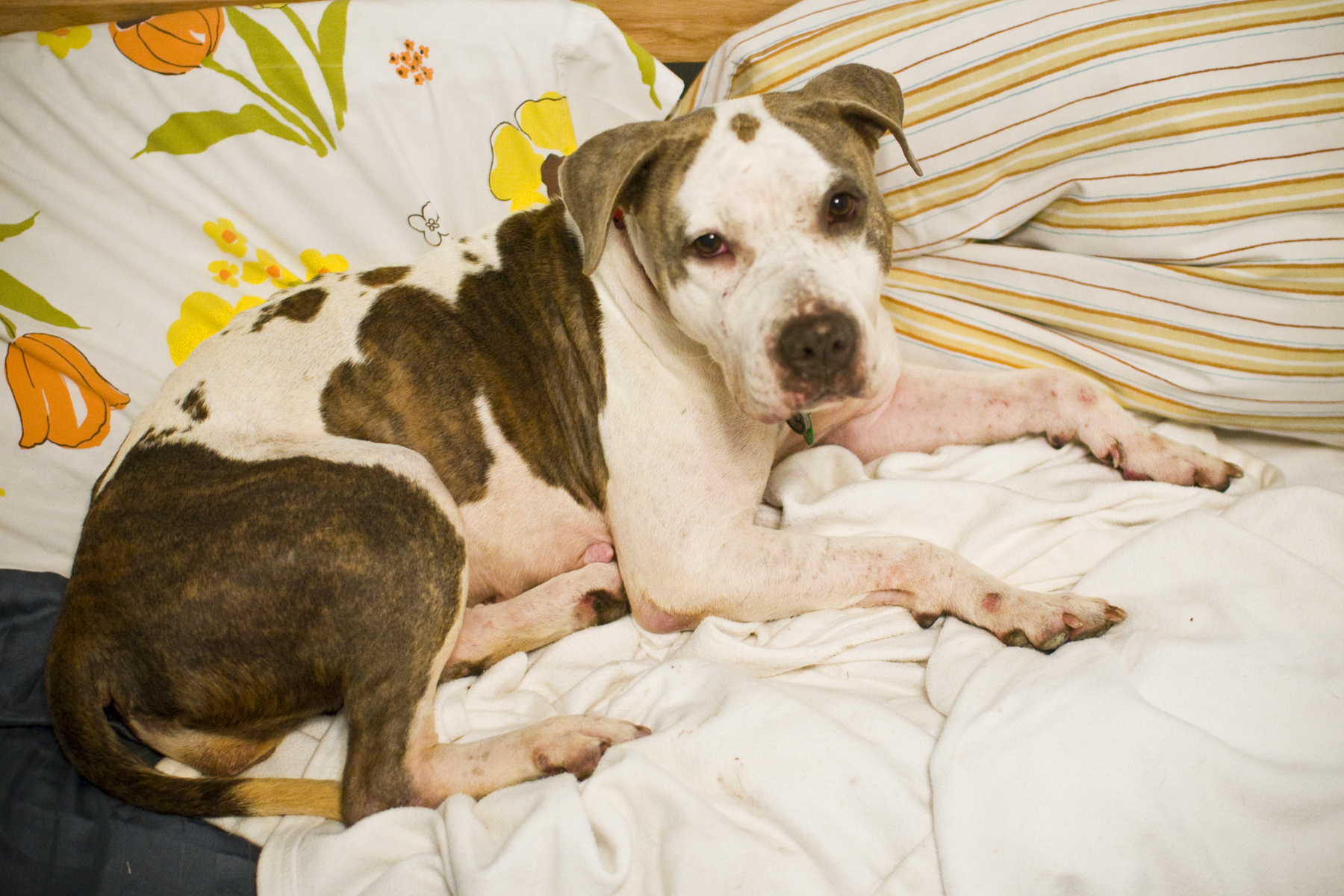
"this may not look cozy to you, but i'm quite comfy here"
1. Every pit bull we adopt out is a pit bull that won’t be euthanized in a shelter. I read recently that more than half of dogs euthanized in shelters due to overcrowding are pit bulls, and yet pit bulls comprise only about five percent of the U.S. dog population. Sure, some sweethearts like Lollie would have been adopted from the shelter anyway, but many wouldn’t. Many fabulous potential dog owners wouldn’t look twice at Lollie in the shelter—scratches on her face, yellowed from the time she spent in a dumpster before her rescue, pacing and jumping from nerves and boredom. Some of those dog owners might be overwhelmed by a shelter and choose to buy a dog from a breeder instead, or they might adopt one out of a foster home—a calmer, more controlled environment. People who would never think to adopt a pit bull see us with Lollie—a non-controversial, professional, young duo—and can suddenly picture her in their life, too. These are the connections we can help people make while we continue to foster dogs. But if we keep Lollie, our foster days are over and we won’t be saving any dogs from euthanasia.
2. Every pit bull we adopt out will cultivate at least one dedicated pit bull advocate. If it’s true what some advocates say, that most people who are scared of pit bulls are just people who have never met one in person, then it must follow that most people who are not dedicated pit bull advocates are just people who have never owned one. Welcome one of these sweets into your home and into your heart, and you will have no choice but to fall, like so many others have. When I met my own wonderdog Chick, I was not looking for a pit bull. I wasn’t even looking for a dog. I tell people that I didn’t pick him—he picked me. And before I realized what was happening to me, Chick quickly converted me into an advocate for the breed group. And between the often unfairly negative public image, the large number of dogs that fall into (or are created by) the wrong hands, and the overwhelming population of pits in shelters, this breed group could use more responsible, loving advocates in its corner. I have no doubt that the lucky family who adopts Lollie will quickly fall not just for her, but for her brothers and sisters, too.
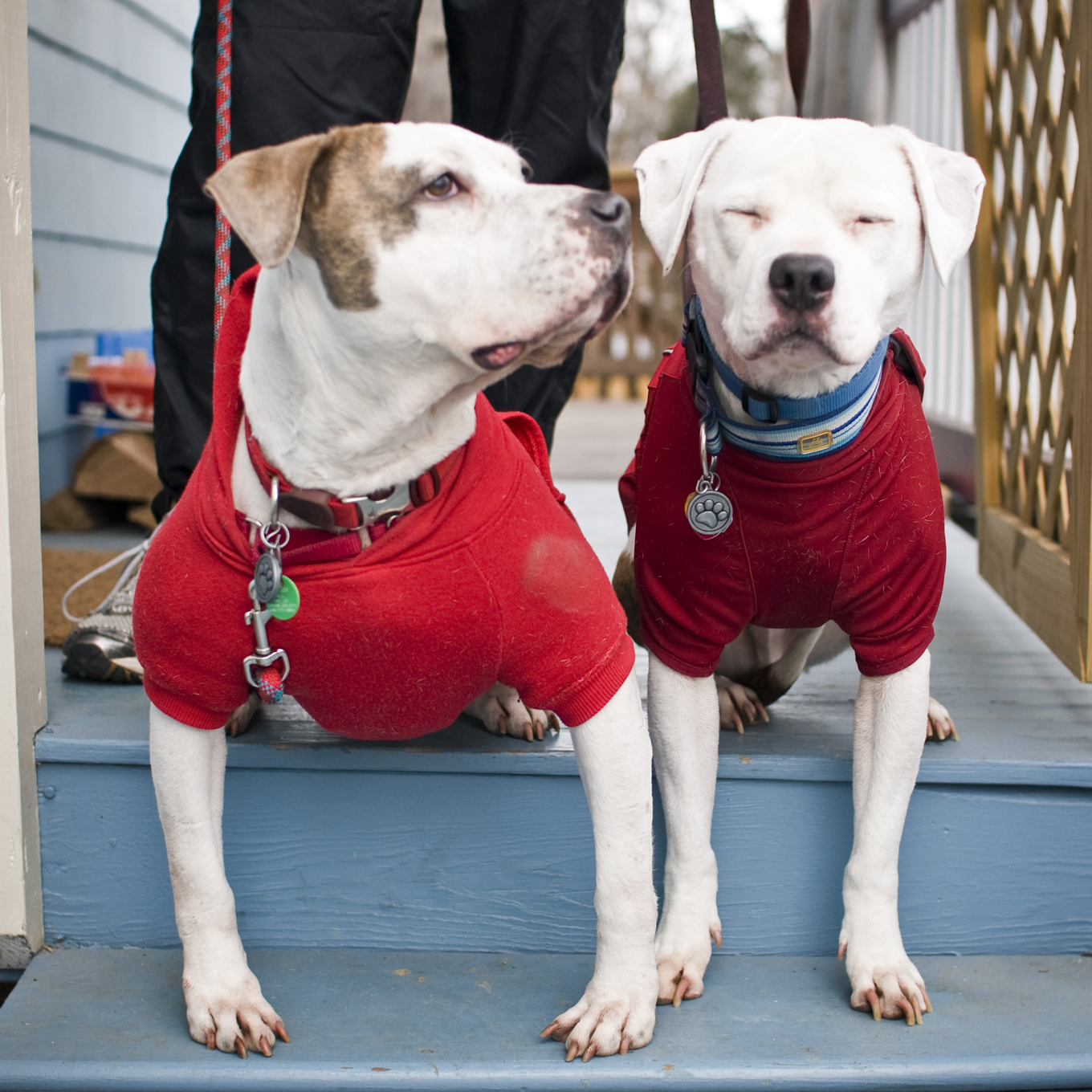
3. In the end, Chick is king. Apparently Lollie’s ample natural charms are more effective on people (in fact on every person she meets) than they are on her dear foster brother Chick. Over the few months Lollie has been living with us the two wonderdogs have come to an agreement in which they mutually tolerate and respect each other, but they are not best friends. If we were ever to adopt a second dog, we would want the new dog and Chick to be best buds. Fortunately or unfortunately, these two lovelies just don’t have the chemistry to be BFF, and that’s that. After all, we all know who is boss around here.

"i'm going to close my eyes and count to three, and her forever family better be here already"
For more info on adopting Lollie, contact us at DCpetographer [at] gmail [dot] com or 301-520-7123.
 For more info on adopting Lollie, contact us at DCpetographer [at] gmail [dot] com or 301-520-7123.

 Love and a Six-Foot Leash