Leash walking: Lollie Wonderdog’s story

Yesterday we posted a lengthy account from our first foster’s forever-mama about Lily’s tough transition from our foster home to their forever-home. Our hope was that Jen’s very honest story would help others feel less alone — that transitions can be rocky and outcomes can still be good in the end. Some patience, love, and work with a dog who doesn’t understand what is expected can come a long way.

Below is the second half of Jen’s story, about teaching Lily how to relax around other dogs when out and about. Many dog people struggle with this issue — where their dog is too nervous or too excited to act cool when other dogs are around. Jen used a creative strategy to countercondition Lily to other dogs’ existence — she brilliantly took advantage of a dog park fence line to provide a steady supply of unfamiliar dogs at a controlled distance, so that she could work with Lily and not worry about the other animals at all. Read on for more:

To work on her excitement about dogs outside the house, I took her to the dog park. But no, not in the way that you’re thinking!

First we sat in the car a distance from the dog park. When we saw a dog — JACKPOT! Begin the string cheese stuffing in the slobbery dog’s mouth! We’d spend about 30 minutes each visit, eventually getting closer and closer to the actual park, WHILE SITTING IN THE CAR!! This was fantastic fun on beautiful spring days, jackpotting all the way.  Soon we were ready to get OUT of the car…. (I was no longer the weird girl stalking dogs at the park…) We would sit about 30 feet away from the fence and I would give her a bunch of treats for LOOKING at the dogs and not barking….after she calmed a bit we would practice some basic obedience commands that she could do easily.  Again, we would get closer and closer to the fence, jackpotting for looking at the dogs and remaining calm…after a few visits, we WALKED UP TO THE FENCE!!! I’m not going to lie, I was stressed, and of course a feisty little chihuaha came right up, barked at us and set us back a bit . . . but eventually Lily got to where she could sniff through the fence at the dogs IN the park.  I was kind of feeling like the local predator at the playground, lurking and peering in at the dog park dogs, since we never went into the dog park, but it was a great place to practice her tolerance around other dogs.
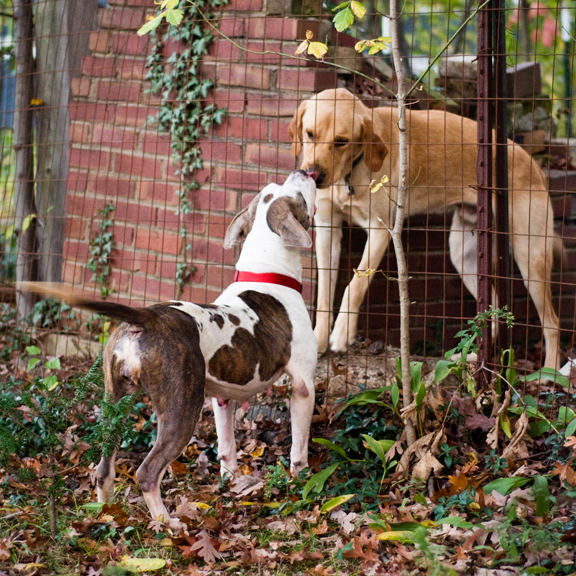
During this period, I would use the “turn around” technique while walking her. If we saw another dog, we’d just turn around to avoid any overexcitement. As we got closer to the fence at the dog park, we progressed on her walks. When other dogs came our way, I would have Lily sit and just feed her a constant stream of treats, while the dog went by. It forced her to focus on me, and she got something good for sitting and ignoring them.

Like many dogs, Lily didn’t great well nose-to-nose on leash, and I had no idea at the time how stressful this could be for dogs. I did a little research, and learned that some dogs just can’t sit while other dogs are going by, because sitting still is too stressful in social situations. Luckily Lily is food motivated enough that all her concentration was on the string cheese. It was at this point we suspected a bit of lactose intolerance on her part — No wonder Chick remembers her as “farty pants!”

When she seemed to be doing better we went on a parallel walk with our little friend Kipper. Kipper is a super feisty, high energy, Jack Russell/weiner dog mix. It went well! Lily no longer viewed Kipper as a snack. They began to play, and then slowly Lily started welcoming other dogs.

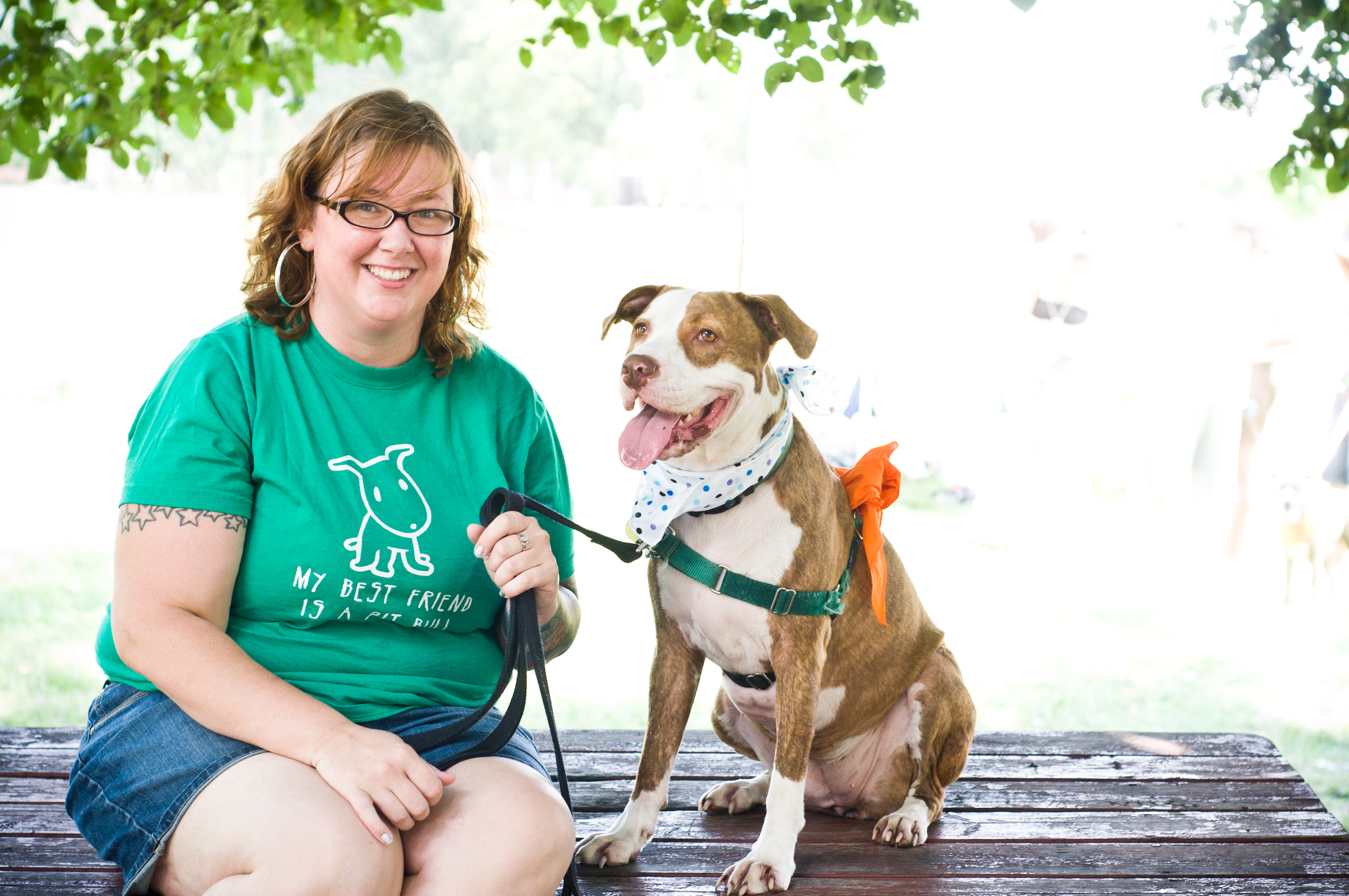
Back in December, we took Lily for her “Santa” picture, an annual fundraiser for the Montgomery County Humane Society. Lily slobbered like a maniac all over her old friend from the shelter, Santa Dave, and we were lucky enough to meet Juliana, foster mom to another MCHS dog, Baxter. We arranged a walking “date” to work on both dog’s issues and from there our dog hiking club, “Pittie Trails,” was born! 

photo courtesy Peace, Love, & Fostering

To help some of her still existent pulling-on-the-leash issues, we attended a drop in “leash manners” session recently. We spent some intensive time with a most wonderful trainer who gave some more great tips for walking — the ever frustrating but effective “stop and go no further when pulling,” and then the call her attention and go in a different direction when she is pulling. I learned to treat her for good walking and to reward her by letting her sniff things she wanted to “fire hydrants, random dog poo etc”….But best of all, Francine (of Francine’s Fun Walks,) emphasized that there are “training walks” and there are “exercise walks.” Essentially, it’s okay to put the gentle leader (the horrible looking head collar that she walks WONDERFULLY ON — thanks for the tip, Running with Squirrels) and take some time off of leash training and just walk! We’ve made a lot of progress by finally buckling down and doing the “no further progress” walks and I’m back to reeking of hot dogs, but we’re doing well!

I’m not by any means, saying any of this was easy.  Lily is a 60 pound hunk of muscular love. While we were working on the dog reactivity issues, we (sigh) haven’t worked on her people greeting manners.  She thinks that all people on the planet exist only to give her love and snuggles, and that every person wants her to jump up on them. I’m still a little embarrassed to have people come in the house still because she’s SO exuberant. I try to point out to people that isn’t it amazing that a dog that was tossed in a dumpster still LOVES people, but most people don’t see that, they simply see a spotted beast flying at them!

Through this work, I think we have curbed her desire to jump over our BRAND NEW 7 foot fence, which is a good thing, as I was going to have to bring some barbed wire home from work and coat the top of our fences . . . JUST KIDDING!!

Lily is a big huge, licking, stinking butt, monster commitment, but we adore her. And she has come a long way: Just last week she was attacked by a miniature schnauzer — yes, a 20 pound schnauzer attacked Lily on a run. The dog was off leash and came charging at us. I stopped running and panicked! Lily immediately sat down. The dog was baring her teeth, growling and then jumped on Lily. As this happened, I immediately saw headlines written all over this, if Lily reacted in any way to this off leash dog . . . The dog jumped all over Lily and she just sat there looking at me like an angel. After what seemed like forever, but was probably just a minute or two, the owner came flying out her door, yelling “OH MY GOSH! IS THAT A PIT BULL?!?!”  She came up to pull her schnauzer back, and as she did, the dog nipped her hand.  I suppressed a smile and said “yes, she is,” and led my well-behaved dog away.
A Hard Transition: Lollie Wonderdog’s story

We’re so excited to share this very personal, intimate story from our dear friend Jen, adopter of our very first foster, Lollie Wonderdog (now Lily). We try our best to portray each of our foster dogs in a fair and honest light, while highlighting the positives more than the negatives. It’s both how we naturally see our dogs, and a better way to find their forever-homes than focusing on their “areas of opportunity.”

In the case of Lollie Wonderdog, we did this too. The truth is, Lollie/Lily was always a wonderful dog. But, a lot of readers will understand what I mean when I say that she is a lot of dog. She has a big personality. She is full of passion, and as a result, she was somewhat reactive. Not aggressive, just excitable and explosive — reaction types that can, unfortunately, lead to the same result as aggression in some cases. In the coming weeks we’ll be exploring the concept of reactivity and dog communication — but for now, we want to share this account of Jen’s first weeks with Lily. We think this is so important because it’s a glimpse into how challenging a dog’s transition can be into a new home. Many families adopt a dog expecting the dog to fit seamlessly into their life right away — but that’s asking an awful lot of the dog, who has just lost everything familiar and been plopped into all new surroundings with new people and new rules. Some dogs take this in stride, while others have a harder time.

We realize now that our environment was great for dogs coming out of a shelter — our home is calm, we don’t have any kids running around, and our neighborhood is quiet with relatively little car and pedestrian traffic. It’s a great place to recuperate from a stressful journey. But on the flip side, it’s a fairly low-stimulation environment compared to the homes of many of our adopters — we learned this through hearing about Lily’s transition.

I commend Jen for sticking with Lily and working so hard to acclimate her to her new home, family, and neighborhood. And I thank Jen for typing up her experiences for us to share — she writes with great frankness. We hope that rather than discouraging folks from bringing home a dog who needs work, Jen’s tale will help folks who are in similar situations feel less alone. Please keep in mind that Lily’s transition into her new life was the most challenging of all of the eight dogs we’ve placed into homes. And you should also remember that despite her rocky start, Lily is now studying for the CGC, and is on track to become a “warrior companion” dog at the Bethesda Naval Medical Center.

Without further delay, here’s Part 1 of Jen’s story:

My heart broke when I read that Nutty Brown has been returned. It hit me right in the gut. All I could think of was that it could have been the same for Lily . . . She was so close to being an adoption return.

About 2 months after we adopted Lily, she nipped my son. She didn’t hurt him, but I freaked out. I frantically told Aleks: I couldn’t do it anymore. I needed to find another home for her. I was desperate and heartbroken.  Might Aleks take my kids and I keep Lily? I didn’t want to let her go, but I was worried about whether it might happen again?  My son, being a 10 year old boy with some impulsivity issues, wants to love her and squeeze her and hug her ALL the time! Try as I might, I was worried that I would turn my back and he might not follow the rules and stress Lily out. Lily had had a difficult time transitioning from quiet Foster Casa to the madness of two working parents and a herd of kids! It had been weeks of frantic barking throughout the house, barking through the night, running out the front door at any opportunity and setting off panicked “ there’s a loose pit bull in the neighborhood hysteria”, and lunging at other dogs on the leash.

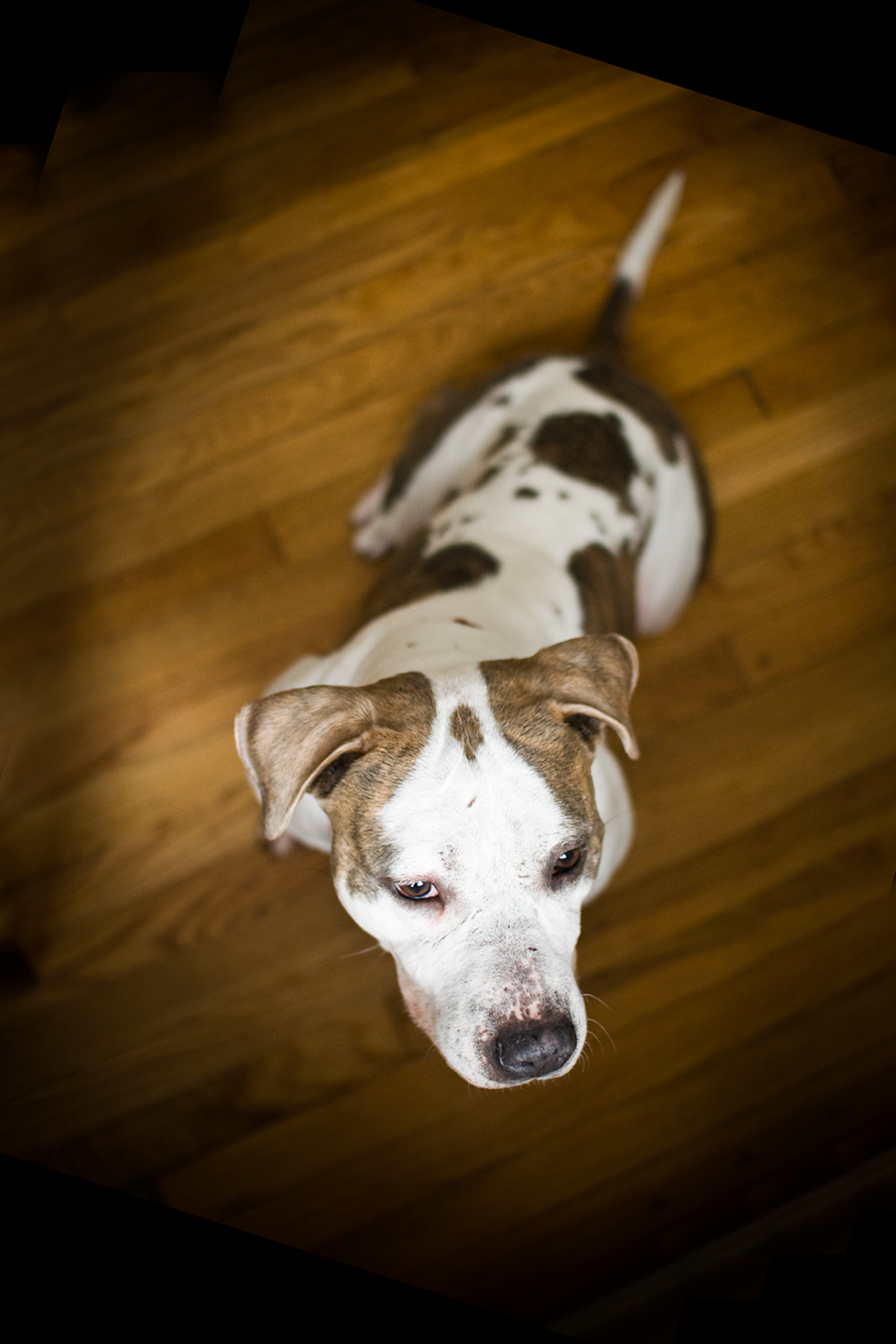
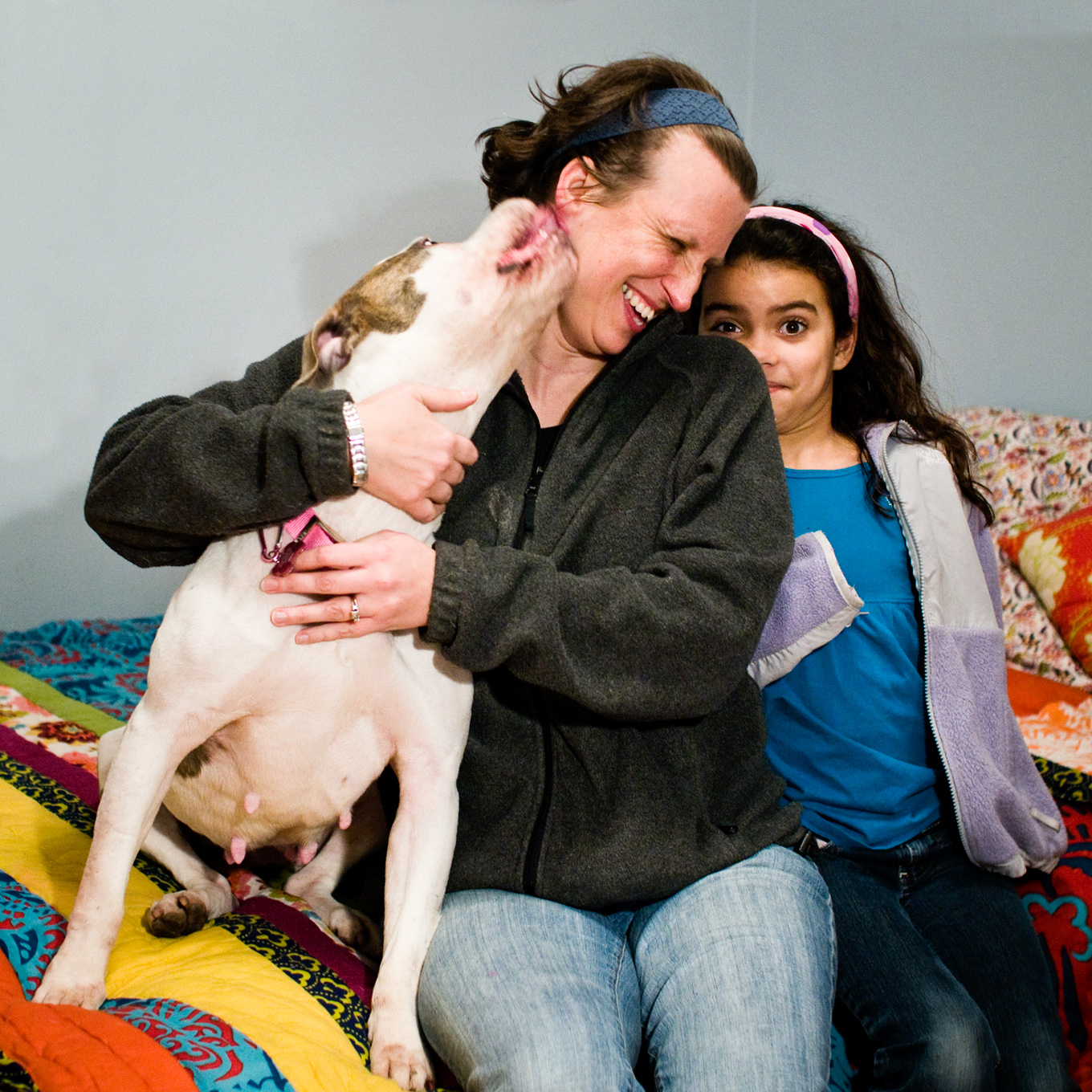
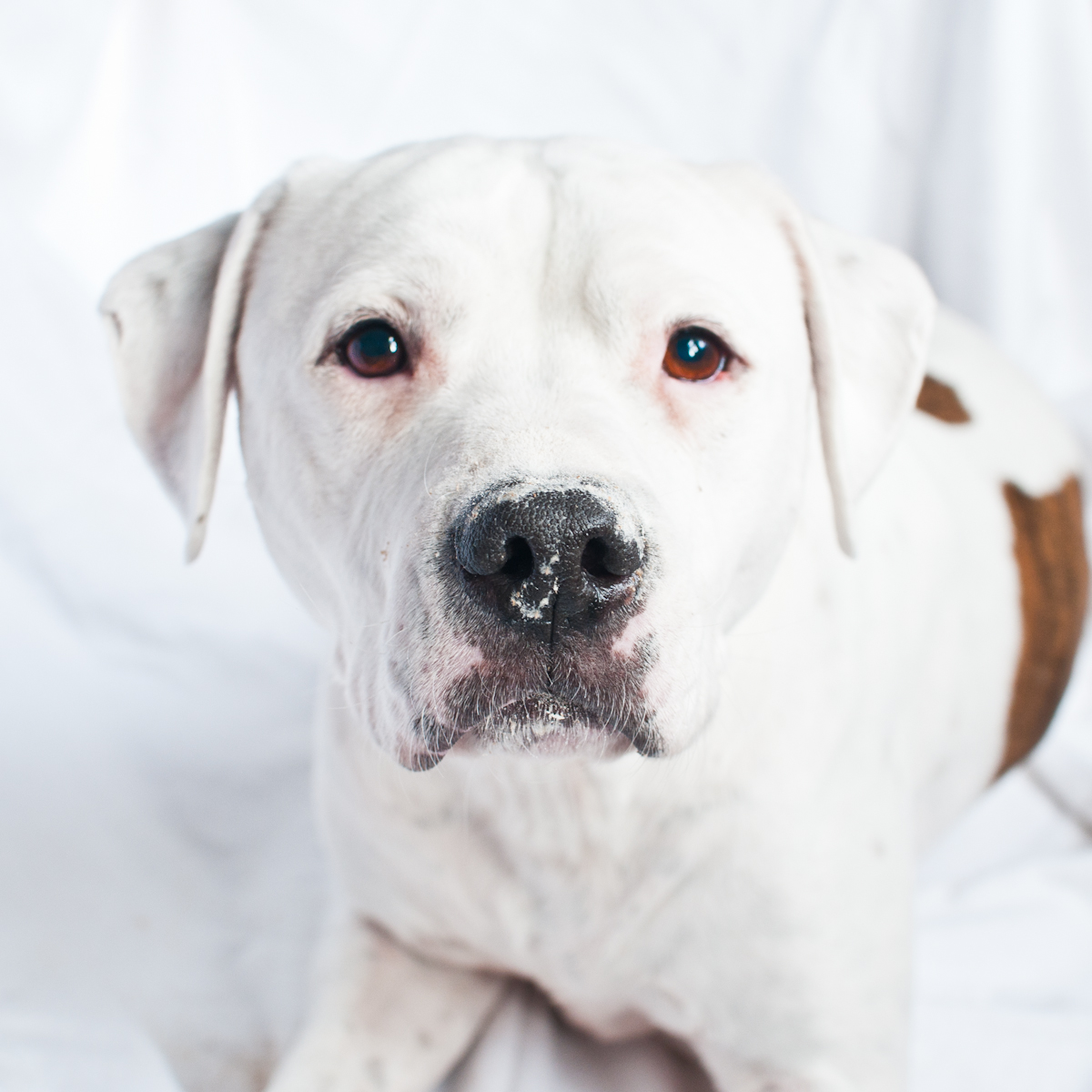
I had fallen for Lily….Her big brown spots, her giant tongue, her white spotty tail…and I felt like I had failed her.  Lily’s transition from foster home to our home was a difficult one.  Unaccustomed to a loud street, she barked at all the cars going by ALL THE TIME.  We have huge floor to ceiling windows with views of the street with a non-stop dog walking parade past our house that she barked at ALL THE TIME…It was a nightmare! Lily would look out one window, bark and race from window to window, running through the house at top speed….She’d throw herself against the windows barking at dogs, birds and squirrels! Oh, the squirrels drove her nuts! And walking her was a nightmare, she would bark and lunge at other dogs, nearly rip the leash out of my hand going after squirrels…I came to dread walking her and tried to do it early in the morning or late at night to avoid the madness….

The day she told Isaiah to back off, it all came to a head. Aleks and I traded many frantic emails that day. I just couldn’t pick up the phone and say that I couldn’t handle this dog, that I was ready to give up… All I could think was “where would she go?” If she went back to the shelter, surely she’d be overlooked. I realized in talking to Aleks, that the problem wasn’t Lily, it was her humans! I either needed to recommit to taking care of her, or hope for a better home for her. As a huge, muscular pit mix, we realized her chances for a good home were slim. We decided to start to really work on things . . . 

First, we had to change her environment. We bought some “frosted” film to put over the lower parts of the windows so Lily couldn’t see out. An amazing barking reduction! After all, she can’t bark at what she can’t see, right? A trainer explained it this way: Lily thinks her barking is scaring off the dogs.  She follows them from window to window barking and eventually she “scared” them away (when really they went walking down the street). After we covered the windows, we started some serious retraining to reduce the barking at other dogs.  Whenever I saw a dog walking by, I opened the front door and sat with Lily watching the dogs go by through the storm door.  When the dog came into view, I “jackpotted” Lily.

Essentially, from the second the dog came in our view, I fed her a constant stream of “super” treats. For Lily, this was pieces of chicken, string cheese, hot dogs — the good stuff. If her mouth was full, she couldn’t bark.  The second the dog went out of view, the treats stopped, we closed the door and went on our business.  On the weekends, I could do this 7 or 8 times a day, maybe more. I was great fun to be around! Weekends would find me ripping the front door open, ignoring the neighbor walking by and frantically stuffing hot dogs in Lily’s mouth. I smelled fantastic!

Pretty soon, Lily was anticipating treats instead of getting upset when dogs walked by the house, and our frantic window barking was fading away. Then it was time to work on seeing and meeting dogs out in the neighborhood . . . “

. . . to be continued

When we don’t see eye to eye

Lately we’ve gotten a lot of questions from blog readers and facebook fans — how do you handle it when your grocery checker is breeding his dog? What do you do if your friend’s boyfriend thinks all pit bulls are vicious? Do you butt in when your car mechanic is talking to a coworker about how he slaps his dog around to make him meaner?

Obviously, there are a lot of approaches to choose from. As hard as it is to refrain from leaping on the person’s back sometimes, we have come around to a more restrained approach — we try to meet people where they are, and look for common ground.

At Love-A-Bull’s 2011 Texas-Sized Pittie Pride event for National Pit Bull Awareness Day, a man showed up trying to sell eight pit bull puppies. The group’s first thought: How dare he! The audacity! But after some deep breaths and a little coaching from some wise friends, the team came up with a kinder approach than shaming him and running him off. Love-A-Bull reps talked to him about his dog and the puppies. Made him feel welcome. And before the event was over, he had agreed to have all eight puppies fixed, and the mama, too. Love-A-Bull kept in touch with the gentleman, and a couple of months later, he offered proof that every last one had been spayed/neutered and placed in a loving home. We’re not omniscient, but it’s not too likely that this would have happened if Love-A-Bull had just shooed the guy away.

People have all different approaches to dog-rearing. As responsible advocates, it’s our duty to check our judgement at the door and encourage everyone to feel pride in their dogs, and invite all dog guardians to join our positive, supportive, healthy communities. We’re often guilty of only preaching to the choir and shunning anybody who isn’t in the choir. If we continue to only pat each other on the back for our oh-so-enlightened views, then what progress are we making?

If a neighbor or grocer or banker is wary of pit bull dogs or hasn’t bothered to spay or microchip his animals, we tend to turn a cold shoulder than to look for that common ground, swallow our judgement, and build the trust necessary to slowly try to introduce him to the resources out there that will help him build a stronger bond. When we surround ourselves with people who are deeply involved in the rescue community and are plugged in and knowledgeable about the big picture, it’s easy to assume that anybody who doesn’t share our views is a lesser dog-lover than we. But those assumptions are dangerous and faulty, and by making them, we are missing a great opportunity.

For it’s in those cross-town, cross-cultural, cross-background, cross-viewpoint relationships that we truly make progress. If we can bring our love of our animals back down to its most basic level, we can build bridges from this purest of places.

Years ago, I had a good friend who was convinced that all pit bull type dogs were Satan’s flesh and blood. This friend refused to even meet my Chick, for fear that Chick would swallow her whole. If this friend showed up at the dog park and there were pit bull type dogs playing, she would turn around and go home. Not worth the risk, she figured.

After months of chipping away, I made some progress by telling anecdotes about my own Chick, and sharing how my own viewpoint on pit bull dogs had changed. Over time, she agreed to meet him, and by the end of the evening he was dozing in her lap. Did we change this friend’s mind and make her a diehard pit bull advocate? No. But she turned into a loyal fan of our Chick’s and became willing to admit that every dog is different. It’s not everything, but it’s a damn fine start.

Concentration before training

We’ve been spoiled with our last few foster dogs, who were very mellow in temperament and had no trouble at all focusing. Dora the Explorer also has a great temperament, but she has a bit more confidence and determined curiosity about the world. This makes her an absolute joy to be around, but also makes her rather excitable in the fascinating great outdoors.

We normally work on loose leash walking as one of our first tasks as foster dog parents. Dora isn’t a terrible leash walker, but when she sees something exciting — be it a cat, a squirrel, or a leaf, rock, stump, or paper bag that looks like a cat or a squirrel, she’s at the end of her leash. Getting her attention back sometimes takes a minute.

Anybody who has worked with a distractable dog knows that if you don’t have a dog’s attention, you’re not going to have much luck teaching it a new skill. So after a few futile attempts at leash walking lessons, we realized we had to bring it all the way back to basics: eye contact, basic attention, and impulse control.

Before we had any hope of getting Dora to pay attention to us outside, we had to teach her how to pay attention inside. Making eye contact when your name is called may seem intuitive to humans, but it is not at all intuitive to dogs. They have to learn it. Once they have mastered eye contact in a distraction-free setting, distractions can be introduced, one after another. These distractions can be as simple as background noise from an open window, another family member walking around, or a ball rolling across the room. As the dog learns to focus among these, the distractions can get more challenging: treats thrown on the floor, a bird walking around in the yard outside, etc. Gradually the lessons can move onto the driveway, then onto the sidewalk, and finally, you may find yourself with a dog who will make eye contact when called even amidst the holy grail of all distractions: a chicken bone in the street or a cat darting under a car.

Here’s a very basic video of the most primary of these steps. We are feeling pretty good about moving our own dog and hotdog show out into the front yard in another few days. Check out this girl’s eye contact. Pretty rockin’, right?

For more info on adopting Dora the Explorer, click here or contact us at info [at] loveandaleash [dot] com.

Chix-a-Lot Friday: I used to love to bake (or, how we worked through my anxieties)

Mama busted me out of the slammer when I was just a young chap — so young that I don’t even remember what my life was like before that. She had never had a dog before and didn’t know much about dog behavior or care. So she did what any enthusiastic, 24-year-old new dog owner with a flexible schedule would do — she brought me with her everywhere. It was heavenly. Back then we worked at Casa Marianella, an emergency shelter for newly-arrived immigrants. When she went on shift, I went on shift. We would do the laundry, cook dinner, intake new residents, help out with immigration forms and vet doctor’s visits. Once or twice a week mama would stay the night, and I would stay with her. When we weren’t working, we were having fun. We went on lots of walks together, visited friends’ houses, and even went to outdoor restaurants and bars. I almost never had to be alone, and it was wonderful.

Eventually mama and dad finished grad school and got jobs, and I started to spend a whole lot more time alone. That’s when I decided to teach myself how to bake.  Only I don’t know how to operate an oven (mama says “thank goodness!”), so I would just grab the dish towels off their hanging places and put them on the ground, pull the aluminium foil off the shelf and unroll it, and then I’d take the bag of flour off the baker’s rack (sometimes the sugar too) and I’d open it up and start baking. And by baking, I mean running wildly around the house with the flour bag, letting it fly all over the place. Sometimes I would stop and make a little drool puddle, dip my paws into it, and then knead the flour that I had sprinkled around, trying to make dumplings.

I loved trying, but I never became a very good baker.

It was about that time that mama called dog trainer Lee Mannix. It turned out that all that fun we’d had — being together 24/7 for our first couple of years — wasn’t really all that good for me. Lee said I never learned to be alone. I never learned how to just settle down. He said it was a confidence issue. He told mama that in my little brain, her leaving was the end of the world because all of the fun went away, and her returning was a great big party. I guess she was right. When she left, I would worry and fret and find activities to keep myself busy, but it was really hard for me to just chill out and sleep. When she would get back, I would get super-duper excited and so would she, and we’d have ourselves a little party. Every time she came and went, the cycle reinforced itself. I would get more worried when she left and more excited when she got back.

According to Lee, there were a few mistakes that mama made in our first few glory years:

  • Not crate training me. It seems that dogs like me do well with crate training because a crate can feel like a safe little den that both keeps a dog out of trouble and reduces anxiety. Most dogs can stop using their crate over time, but a crate is a great transitional tool for many dogs who just don’t know what to do with themselves when their people are gone and get that overwhelming urge to bake.
  • Not teaching me to be alone from the start. By taking me everywhere, mama wasn’t setting me up for success for the day that she had to go and get the kind of job where I couldn’t come with her. She should have practiced leaving me alone from the very first day she brought me home, for varying lengths of time.
  • Making a big deal about comings and goings. Mama and dad would fuss over me before they would leave, which is how I learned that them leaving was a Really Big Deal. They’d also get super excited when they came home, so that became an RBD too.
  • Letting me rule the roost. I still think Lee was wrong on this one, but apparently letting me sleep wherever I want, eat whenever I feel like it, and climb all over everybody all the time was only contributing to my anxiety, rather than helping it. And we all thought that they were just being nice to me.

Before we sought help, my worrying just got worse and worse. Mama says her “favorite” baking project I ever did while she wasn’t home was when I decided to try baking with the dirt from the tomato plant pots. Mama and dad planted a container garden one spring, and when it got too cold outside they would bring the containers inside. Well wouldn’t you know, the dirt in those pots, mixed with compost and some fish emulsion, was JUST what my baking recipes had been needing. So I helped myself to some of that dirt, don’t mind if I do. Here is a picture that dad took when he got home, because mama was away on a busy-ness trip and he wanted to make sure she saw how embarrassed I was. Thanks a lot, dad.

So we started training. We went to a lesson once every two weeks, and practiced every day for half an hour in the morning and half an hour in the evening. We did lots of drills where I just had to sit and be good and mama would feed me hot dogs. At least, it seemed that way. Mama says we were doing exercises to slowly get me used to her leaving and coming back, but it was so easy that it didn’t even feel like exercise. It just felt like she was feeding me hot dogs. Lee said that was how we knew we were going slow enough, whatever that means.

Over time, I got better. Here are a few of the general things that we did (in addition to desensitization) to help me be a cool cat dog.

  • I started staying in a dog-proofed room while my people were away. I don’t chew on furniture or pillows or anything, so for me that just meant a room with no trash cans, baking supplies, smelly socks, or anything else that I could occupy myself with.
  • I started eating all of my food out of kongs, gatorade bottles, and other food-dispensing devices. This meant no more bowls, ever. Instead of having two meals at regular mealtimes, I would get little snacks throughout the day. Lee said that this would help me exercise my brain so that it would be too tired for baking experiments while mama and dad were away.
  • I started always getting an activity to do when they left. Usually, mama would fix a big batch of frozen kongs stuffed with dry food, wet food, peanut butter, yogurt, bananas, and chopped up veggies at the beginning of the week. Those were my favorite snacks, and I would get one every morning when the people would leave. I didn’t think this would happen, but it turned going-to-work time into an “oh goodie!” time instead of an “oh no!” time.
  • They stopped loving me when they came home. When they got home, I would get super wound up and bounce around, jump, sniff, wiggle, and act as cute as I could, but they just plain stopped loving me. Once I calmed down and went back to my dog bed, they would come over and love me like they always had. I didn’t like this whole idea one bit, but I guess it did teach me that their coming home was No Big Deal.
  • Exercise, exercise, exercise. We went on at least two 30 minute walks per day, and at least one or two shorter ones. Going out in the yard and very short walks was not enough to keep me tired and relaxed, so we started going on adventures. At least once a week, we had to go to a new place. We learned that new places were more exciting and more exhausting, and helped me be more flexible. I have always had a good downward dog, so I think they must mean emotionally flexible, not physically flexible.

Now don’t get me wrong — I am still a very sensitive boy and I get nervous quite easily. Whenever something out of the ordinary is happening, I get a furrowed brow and a very concerned look on my face. Mama seems to think it’s cute, and always complements me on how expressive I am. But mama and dad have learned how to manage my anxiety, and I have learned how to cope pretty well. Now when it’s time for them to go to work, I eagerly wait for my yummy treat and trot happily into my room to eat it before having a nice long nap. If you ever come over to the house I will still squeal with excitement and jump and bounce like a tightly wound spring, but I will settle down much faster.

And I let mama and dad do all the baking. The fosters and I just help.

Fostering made easy(er) – the Tiedown

There are a few tools in our fostering toolbox that we can barely imagine living without. Kongs and other food-dispensing puzzles are one; baby gates are another; and the holy tiedown is the third. If you took these tools away, we would first cry for a very, very long time, and then we would drive ourselves crazy and possibly even quit fostering. Well, we probably wouldn’t quit, but we would drag our feet a bit and probably drink a lot more.

The tiedown is an especially valuable tool to us since we live with one fussy dog who doesn’t necessarily appreciate energetic young dogs bouncing and pouncing all over him, but we insist on fostering anyway. Our tiedowns keep Chick happy, fosters out of trouble, and us from having to supervise closely every minute of the day.

A tiedown is essentially a short length of leash, cord, wire, or rope that is attached to something heavy or permanent on one end (such as a sofa or a piece of furniture), and to a dog’s collar on the other end. The device limits the dog’s zone of activity to a few feet, and really cuts down on the number of bad choices the dog can make. While on tiedown, our foster dog can’t try to play-wrestle with our Chick, can’t pee on the rug, can’t drool all over our new sofa, and can’t tackle visitors when they come over to visit. If introduced and trained properly, the tiedown can be a happy place to solve a puzzle, have a snack, or take a nap.

Dora the Explorer took to her tiedown instantly, but in order to reinforce a positive association, we were careful to feed her all of her kongs and other food puzzles in her crate or on a mat by the tiedown for the first few days. Now when Dora sees the tiedown wire come out of its drawer, she waggles her little butt so hard that her tail almost whips her in the face — she knows it’s kong time. Detailed information about the various uses of tiedowns is available from the East Bay SPCA here.

When introducing a new foster into our household, it is critical for us to ensure that the getting-to-know-you phase between our own Chick and the new dog goes as smoothly as possible. We take this phase very slow — in the past it has taken us anywhere from two days to a month to fully integrate our foster with our Chick. We have a regular routine that involves parallel walks, side-by-side obedience, baby gates, and finally the tiedown. Some organizations and advocates warn against using tiedowns in dog-dog interactions, and with good reason — if used incorrectly or not supervised properly, a tiedown can lead to teasing, abuse, frustration, and fighting. If you’re considering using one to smooth your own dog-dog integration, first make certain that the dog on the tiedown will not be pestered or bullied. This is critical.

Our home includes a near-guarantee that Chick will never approach a dog he doesn’t already know well to bully, play, snuggle, or otherwise engage. He does not like strong come-ons from other dogs, and is very nervous in new canine company. Chick’s strong preference for being left alone by other dogs means that a tiedown works beautifully for us — it allows Chick to slowly warm up to another dog’s presence without the risk of the other dog coming on too strong — an event that sometimes flips on Chick’s reactivity switch.

We begin with plenty of parallel walks, limited sniffing, and supervised interaction through a tall baby gate. We know it’s time to move to the next phase when both dogs consistently display happy, calm body language, a willingness to lay on either side of the gate calmly, and maybe some occasional face-licking through the gate. Next, we move our foster dog to a tiedown and allow Chick free-range status. Chick generally spends the first few short sessions across the room on his own dog bed, avoiding any interaction at all. Still, we offer much positive reinforcement for calm behavior by both dogs. If the foster is able to settle down and be calm in Chick’s presence, we start bringing Chick closer to work on puzzles, eat snacks (only ok if neither dog is a resource guarder), or do obedience. Chick is usually able to roam the house freely shortly after, walking a wide circle around the overenthusiastic foster without so much as blinking.

Eventually, Chick becomes comfortable enough to settle in within a few feet of the foster, and the foster dog is calm enough to accept Chick’s presence without needing to sing a song or breakdance. Because of Chick’s distaste for rowdiness, he does an exceptional job of teaching fosters what behaviors make him stay close and what behaviors make him run away. An illustration of this process with a previous foster, Stevie Wonder, is here.

Once we feel confident about the budding relationship we take the foster off tiedown but leave on a leash as a dragline that we can grab or step on if needed. Eventually, the dogs learn to be together. The whole process can take a while, but if done correctly should be drama-free. BAD RAP did a great post about tiedowns as part of a series on dog fostering. We loved this post, which is available here.

In our new house we decided to install a “real” tiedown instead of relying on leashes and doorknobs, which can certainly fail or be damaged. The process took about 30 minutes and cost about $10. Here’s how we did it.

First, we went to the hardware store and purchased a heavy-duty eye hook, a 3′ length of plastic-coated wire, two leash-type clasps, and a ferrule and stop set.

Next, we drilled a hole in the wood door frame between our living and dining room, and installed the eye hook.

Third, we attached both leash clasps to either end of the length of wire using the ferrule and stop sets.

Finally, we attached one end of the tiedown to our new eye hook, the other end of the tiedown to our new Dora the Explorer, and we put down a dog bed and a nice stuffed kong. Voila!

A few stray thoughts:

-Be sure to purchase hardware that’s rated at a high enough weight to contain your dogs. We bought hardware and wire that can handle a load of at least 150 lbs, even though our dogs rarely weigh more than 55 lbs. Better safe than sorry.

-Take plenty of time to get your dog accustomed to the tiedown before introducing another dog into the scene. Some dogs will get it right away, others will be unhappy. Approach training a tiedown just as you would approach any other form of training: reward good behavior, ignore bad behavior, and do it in short increments.

-Never leave a dog on tiedown when you’re not home. You don’t need to have your eye on the dog every minute, but you should be nearby and checking in frequently.

-Have fun, be careful, and let us know how it goes!


Why they’re so good

People often ask us: how are your fosters all so well behaved? How do you teach them to be so good?

It’s simple, really. They are good because we don’t give them opportunities to get in trouble. From the minute they walk in the door, our foster dogs are kept on a short leash — quite literally at first, and then figuratively later on. Naturally these clever little rascals still find ways to misbehave here and there, but for the most part if they never have the chance to make any poor choices, then they’re left with only good choices to make.

Yesterday’s pesto extravaganza is a good illustration. I was busy in the kitchen, which might have given Dora plenty of opportunities to run around the house finding mischief.

Looks like you've got this pesto under control. Maybe I'll go find some trouble to get into.

But instead of letting her do that, I blocked off the kitchen door so that she had no choice but to hang out with me in the kitchen/laundry rooms, where I could keep an eye on her.

A hamper and bookcase stand in for a baby gate in a pinch.

I picked up all items of interest like shoes, a trash can, and a low bowl of tomatoes (which Dora likes to play catch with), and gave her a dog toy smeared with peanut butter to keep her occupied with authorized activities.

This peanut butter ball is so fun it makes me wanna play bow!

I like to keep a little jar of treats handy and toss one in the dog’s direction when it’s practicing desired behaviors (sitting quietly and watching, laying down on its bed, playing quietly with a toy), and ignore the dog when it’s being naughty (jumping up, barking). To prevent the self-reinforcing behavior of jumping on the counter, it’s good to keep tasty snacks out of reach. Dogs who are big counter-surfers may benefit from a tiedown to help them learn to settle and keep them out of your dinner.

I am a good girl who never jumps up on the counter, and I would like to help you build your pesto, please.

By rewarding positive behaviors and avoiding or ignoring negative ones, we have generally had good luck “extinguishing” the bad habits and promoting the good ones. Dora took to our little game very quickly, and learned that laying on her blanket means that treats would fall into her paws now and then.

Ok mama, it looks like you don't need my help building the pesto. I'll just be here on my mat relaxing like a good girl.

So far, Miss Dora has been easy. She loves to snatch an occasional cherry tomato, cork, glove, or balled up piece of paper and go prancing triumphantly around the house with it, but she readily gives it back when asked, and hasn’t shown very many other bad habits. Thanks for easing us back into fostering so gently, Miss Dora!

For more info on adopting Dora the Explorer, click here or contact us at info [at] loveandaleash [dot] com.

Four days at Animal Farm Foundation

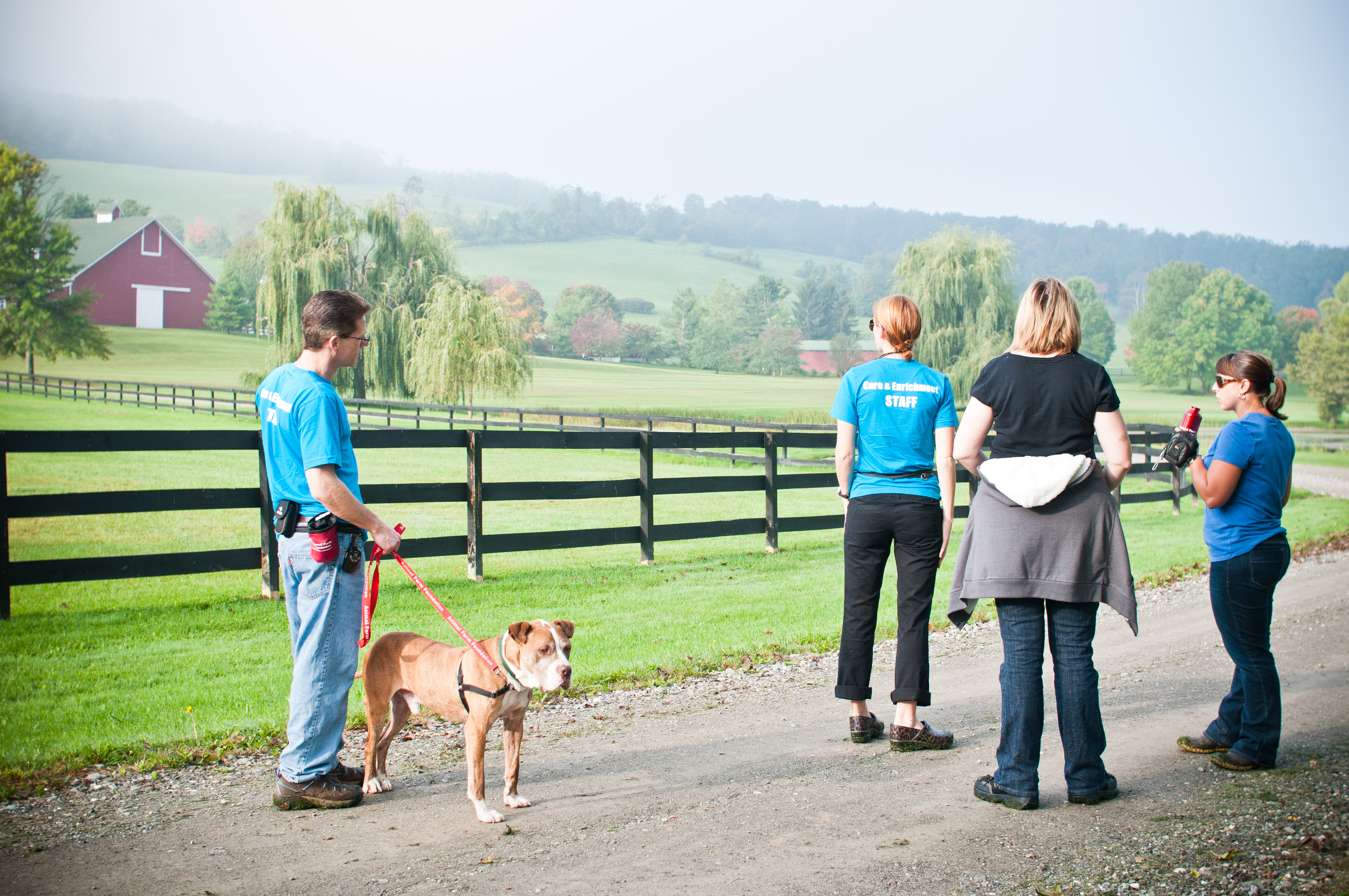
A few weeks back while Zee was busy getting adopted, foster mom headed up to Dutchess County, NY for a four-day learning-and-fun program for pit bull advocates and shelter professionals at Animal Farm Foundation.

AFF is a private not-for-profit foundation devoted to restoring the image of pit bull type dogs — the organization does its work through advocacy, research, best practices, and rescue of a small number of dogs, which are cared for, rehabilitated, and trained on their property.

Not only is the mission of the organization noble, but the property itself could hardly be more idyllic. AFF sits nestled among the rolling hills of Dutchess County amidst working horse farms and beautiful estates. My visit coincided with the very start of leaf-turning season. The nightly rains turned the ponds into rivers and the mornings into misty wonderlands.

Upon arrival, each participant (or “intern”) is assigned a dog who they will feed, care for, sleep with, and work with at training sessions. My partner was this gorgeous hunk, Ivan:

More on Ivan tomorrow, but for now let’s just say he is quite a catch. Gorgeous, smart, athletic, funny, and loves to cuddle. Sounds almost like a personals ad, huh?

Daily activities were split between classroom-style learning (including a presentations by the National Canine Research Council on the Pit Bull Placebo, by AFF about how language and policies — even seemingly good ones — affect broad attitudes toward pit bull type dogs, and even a short lecture on dog nutrition and digestion), and hands-on work with the dogs. One particularly interesting classroom session was about how dog breeding and genetic composition affects appearance, behavior, preferences, and other characteristics, and how often humans get it wrong when we guess at a dog’s breed makeup (and consequentially, its behavior) based on its physical appearance.  Hands-on work with the dogs included some hikes, walks, several short training sessions, basic shaping and luring work, some clicker training, and enrichment in a kennel setting.

Resident dogs attended some of the sessions with us, and took good advantage of their time in the spotlight to show off their hammiest hamminess. My own Ivan was proud to display his ability to wiggle and worm his way from one lap onto the next in our seated row without ever touching the ground; Lotti Dotti’s special talent is laying splayed out in a lap, displaying all of her most beautiful spots:

In addition to the organization’s advocacy and rescue work, Animal Farm Foundation also runs a few specialized training programs for pit bull type dogs, including assistance dogs, therapy dogs, and sports dogs (frisbee, flyball, dock jumping, and agility).

Well-matched dogs not only love this work, but their presence out in public amongst people and other animals helps advance the idea that AFF works so hard on — that pit bull type dogs are just dogs like any others– nothing different, nothing unique.

A couple of quick phone-cam videos of AFF dogs demonstrating their evolving frisbee skills and dock diving skills:

AFF will resume offering the (FREE!) program in the spring, and the four days will be well worth your while if you’re a shelter or rescue worker or an advocate with an interest in issues of pit bull advocacy and adoption. Although individuals with a wide range of knowledge can benefit from the program, it seems especially geared toward individuals with intermediate level of knowledge about and experience with pit bull type dogs, who want to step up their game and be able to advocate for them with more confidence and authority. AFF’s lessons are widely applicable, but would be easiest to take home to a small or medium-sized shelter or rescue with a strong volunteer base.

Interested? Contact AFF for more info on how to apply.

the art of being

In our little dog fostering world, there are very few steadfast rules. When we picked up our first foster (Lollie Wonderdog), we kind of made it up as we went along, trusting our intuition to help us be good foster parents. We haven’t read much instruction or philosophy on good dog foster parenting so we can’t say for certain that our approach is the best one, but it feels right to us: first, teach the dog how to just be.

When a new dog enters our home, the only thing we can be sure of is that its most recent experiences have been new, stressful, and probably a little bewildering. These animals have been removed from any stability they once knew and have no idea, when they enter our home, that it will be a good, friendly, safe, comfortable place. So our first task is to help them learn how to just be. And we take this simple little primary mission very seriously.

Just be. It’s hard to explain what we mean by that. But there is definitely a bit of magic that goes on during the first few weeks of a dog’s time with us. In truth, there isn’t a process. And yet, those magical first few weeks set the tone for the rest of our time together. Somehow, it’s the time in which our foster dogs learn how to be house pets.

We spend no time on tricks and very little time on basic commands, but we do help them learn how to function in a household. By being around us in a low-pressure environment, they first learn how to relax. Period. Then, they learn how to not panic if one of us leaves the room. They learn how to eat in our presence and without our presence. They slowly begin to learn which furniture is dog-friendly and which furniture is not. We help them understand what a toy is and isn’t. They learn to get excited at meal times and when a person grabs a leash off its hook. They learn that barking or mouthing gets you no attention, but a nice, calm presence often does. They learn how to appreciate a good round of chase in the yard or a nice snuggle on the couch. They learn that begging for food is futile.

They learn how to politely initiate a game with a person. Just this weekend, Stevie learned how to properly return a ball to us to play fetch. This involved no formal training and no commands, but a consistent pattern of reinforcing the good behavior (dropping the ball at our feet) and ignoring the bad behavior (teasing us with the ball, running a few steps away when we look at her). That’s the beauty of this important, formative time. None of it involves commands or training. Just simple, no-pressure, consistency. Lots of patience, lots of rewards, and lots of love.

Of course. No dog is perfect, and most dogs have had a hard time with some element of our basic concept of how a good house dog behaves. Still, after a few weeks (and the length of time varies from dog to dog), we usually feel pretty good about a dog’s ability to just be, and we sometimes move on to obedience and commands. But truth be told, we didn’t teach Gonzo a single trick or new command during the entire 3 months he was with us. We knew there would be time for that later. But we did help him better understand how to be a good dog. After his time with us he knew not to get up on the furniture unless invited, he knew where to lay down to wait for his dinner, he knew not to steal shoes and run around the house, and he knew that climbing up on a person for a movie was likely to gain him a nice snuggle and some ear rubs.

And here’s the deal: I would be willing to bet that few dogs get returned by their adopters because they don’t know how to shake or roll over, but that many do because they don’t know how to interact with humans and behave acceptably in a house.

And avoiding that tragedy is the business we’re in.

on dog puzzles and the greatest dog trainer that ever was.

Mr. Gonzo Bunny-Ears has really taken to eating his kibble and snacks out of dog puzzles. We have been feeding our own Chick in this manner for years so to us it’s second nature, but often we get questions from bloggers about the types of puzzles we use, how we use them, when, etc.

Shortly after we adopted Chick as a young chap of two or three, he developed pretty severe separation all kinds of anxiety. He would pace nervously when we were getting ready to leave. Decorate the house with the garbage while we were gone. Refuse to eat for days during car trips. Never let us out of his sight when we were home. So, we went to a trainer. A first class, badass trainer.

Lee Mannix had a way with dogs. He was one of those people who can just communicate with them, and they with him. His craft was not teaching dogs “sit” or “shake” but rather teaching owners how to understand and interact with their dogs to prevent, treat, and manage problem behaviors. And his creativity seemed limitless. Some of the tips and tricks he came up with to help us deal with silly problems – like Chick pulling dish rags off their hooks – not only worked flawlessly, but boggled the mind. The human mind, that is. Lee left this world about a year ago, but his personality, his methods, and his lessons live on. For a longer account of the magic of Lee, read here.

But I digress. The first thing Lee asked of us was to stop feeding Chick food in a bowl. Ever. From that day forward, he was to eat only through training (kibble as reward), or in various mentally challenging games (kibble as problem solving goal). The idea was, that if meals are no longer predictable and punctual and effort-free, the dog will become more “willing to please” the owner, knowing that he’d better watch carefully lest the puzzle come soon. It also helped keep the dog busy for a while, so that we could hand him a snack, leave, and he would be so busy working on it that he wouldn’t remember to get worked up and anxious.  So we went from two meals a day, in a bowl, to five or six meals a day, in all different ways.

The simplest, and perhaps our favorite method to date for its sheer convenience and free-ness, is the Gatorade bottle. Take the plastic ring and the label off, wash and dry, shake a little kibble in, and hand it to the dog. A beginner dog may take 30 minutes to get the kibble out, trying to get at it with his tongue or his claws. A veteran only needs a few minutes. As a bonus, the dog eats more slowly than from a bowl, aiding in digestion and reducing gas.

Our second favorite is the grandfather of all dog puzzles, the kong. The easiest way to kong a dog is simply to scoop some kibble in, and seal the opening with something sticky – some peanut butter or cheese whiz works well. But this is too easy for our little geniuses.

To make a kong more difficult, we started to put a little peanut butter, yogurt, or cheese at the bottom of the kong, add the kibble, then seal the top. This way, dog has to extract the very end of the goodies with his tongue. For our geniuses? Still too easy. The next phase was mixing the kibble with yogurt or runny peanut butter in a bowl, and then stuffing the kong. The whole mixture is sticky and wet, so it takes a lot more tongue action to finish the work. This is challenging enough for Gonzo; it takes him about 20 minutes to finish one of these. For Chick, though, we have to take it to the next level: the freezer. Once frozen solid, it takes even an advanced chewer a while to get all the goodies out.  Our normal filler for these kongs is a combination of kibble, peanut butter, raw veggies, cheese, and leftovers – whatever we have that is dog-friendly and not likely to be otherwise eaten.

We usee many other food-dispensing devices and toys also, as Gonzo is modeling here. But the two originals, the ones shown to us by Lee, will always remain our favorites.

For more info about adopting Gonzo Bunny-Ears, contact us at DCpetographer [at] gmail [dot] com or through Partnership for Animal Welfare.