Chix-A-Lot Friday: Aunt Kareaux comes to visit!

Well she doesn’t really spell her name that way, but she really is my Aunt. You see, some of my extended family is from Louisiana, and sometimes I can’t quite keep straight who is who. Is it Aunt Kareaux or is it Aunt Karo? In any case.

Aunt K is my very favorite aunt. You can imagine how excited I was to find out that she was coming to pay her sister me a visit in our new land! Here are my favorite things about Aunt K:

1. She always pets me when I give her my sweetest Please Pet Me look.

2. She always smells good. A little bit like vanilla, and sometimes like salmon around her fingernails (if she has been cooking).

3. Sometimes she and I wear matching outfits, like at Christmas a few years ago.

4. She and I match splendidly, with her shining gold hairs perfectly complementing the shining gold stars on my Paco collar.

5. We both try to go running from time to time but get a little bit lazy when it’s too hot outside (it’s usually too hot outside for running in my opinion).

But the thing that’s a little different about this visit this time is that I have to share her with my new brother, who apparently also has five favorite things about Aunt K even though he just met her yesterday.

I’m just gonna have to work extra hard at being snugglier and sweeter than him so that I’m still her favorite!

Five phases of reactive dog ownership

Raise your hand if you already knew that Chick is a recovering reactive dog. Good, that’s a lot of you. We have written about it openly in the past, in the hopes that we can help others stop feeling ashamed of their dog’s unsavory behaviors.

Ok, now raise your hand if you knew that Doodlebug is a reactive dog too. What’s that? None of you? Well, that probably makes sense, since until about a week ago, we were on your team too.

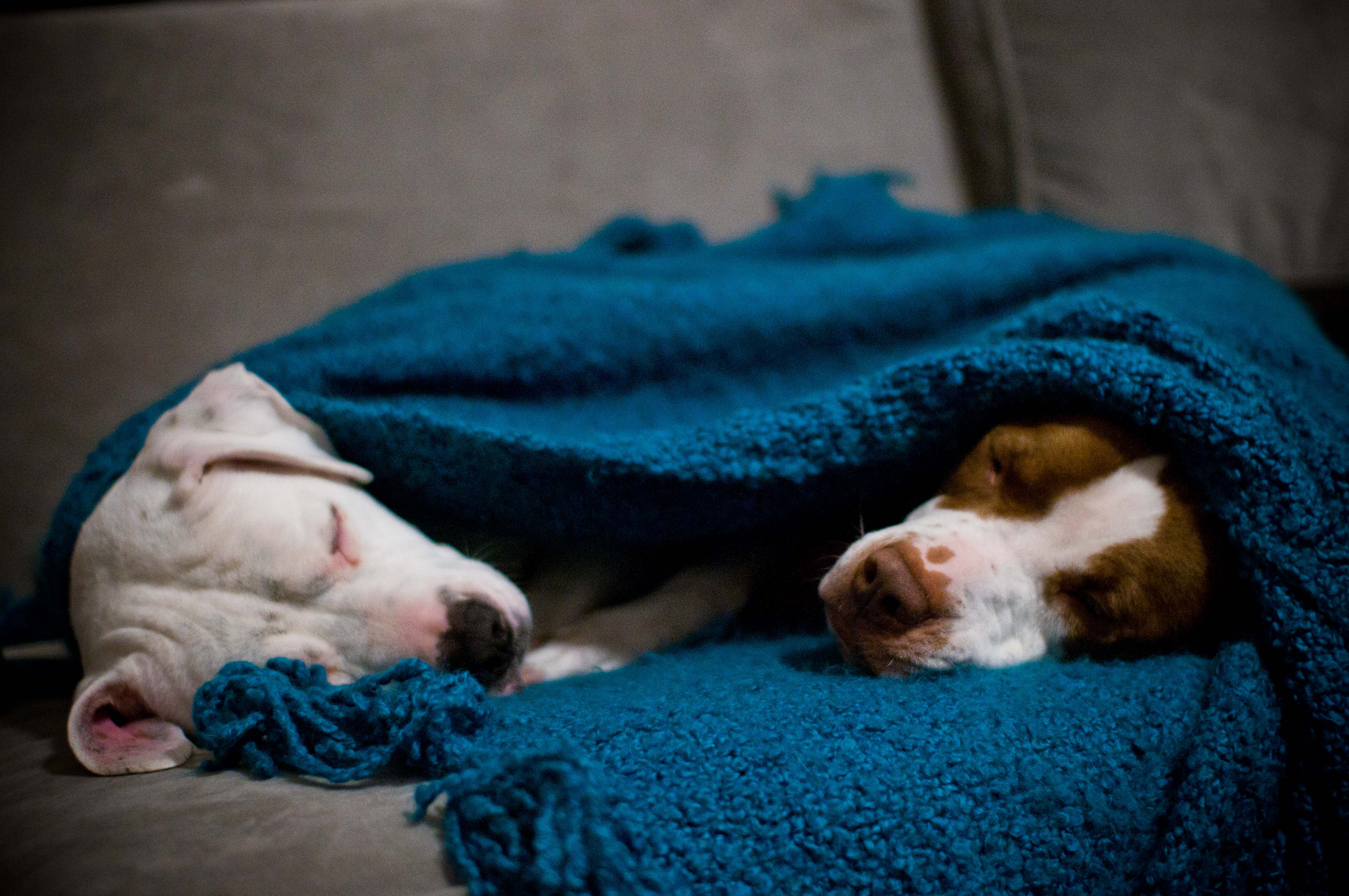
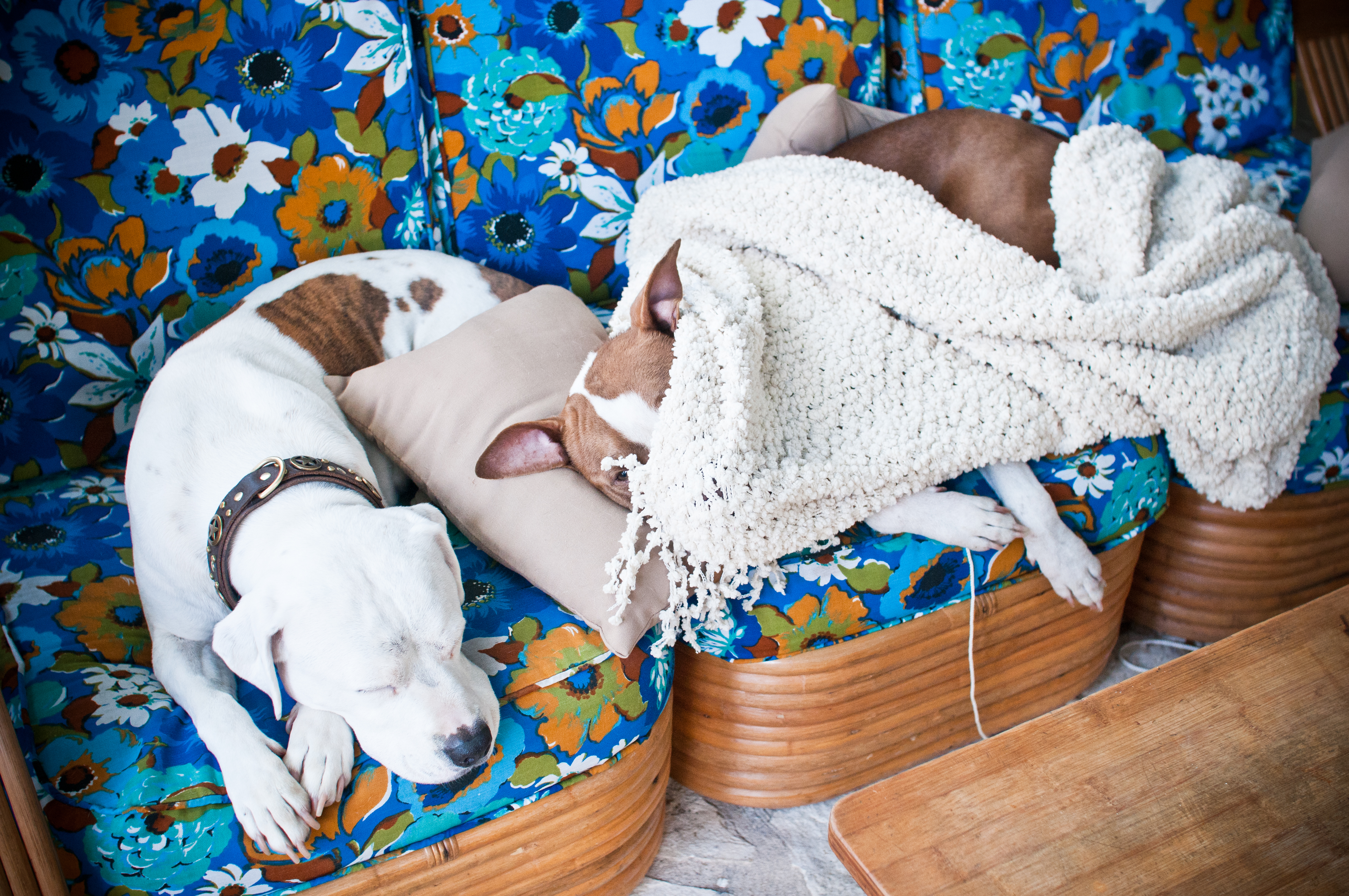
How can this snuggle-pile be full of reactive dogs?

We’ve done a lot of thinking and learning about reactivity over the past years, but a lot more over the past week or so since we’ve started to understand that we’re dealing with a bit of it in our Doodlebug. Just yesterday morning I was thinking about the phases of caring for a reactive dog — the long period of not understanding or not admitting it, then the scary journey toward facing our fears and moving forward, and finally that sense of accomplishment that comes with knowing that we have a plan for whatever situation we find ourselves in. Our journey with Chick’s reactivity has been lifelong, but we spent years in the pre-action phases and reinforced a lot of bad habits before we found the courage to move forward. With Dude, we figured out what was going on in a snap. It may still take months or years to get to our end point, but just knowing that a positive path exists and we’ve taken the first step is a huge sigh of relief.

Our five phases are based solely on our own experiences working with reactive dogs in our home — everybody’s phases might be different!

1. Realization. Maybe your new dog took a while to come out of her shell, and was perfectly polite and neutral toward dogs at first. Or maybe your puppy didn’t start showing signs in the first year of his life. Or maybe you built up a high wall around your dog so she never had a chance to express her reactivity before. There is a whole catalog of reasons that you may not realize you have a reactive dog on your hands — these are just three. With Chick, we were in this phase for a few months, and with Dude, we were there until last week.

2. Denial. Then something changes, and maybe you start to see hints of reactivity here and there. A surprising growl at a motorcycle whizzing by the house. Or a lunge and snap at a cute puppy on the trail. Or some extreme pulling, panting, and whimpering every time you pass a dog jogger in the neighborhood — suddenly more intense and focused than in the past. But obviously, these incidents are flukes — easily explained away . . . right? The motorcycle just startled him. He was just excited to play with the puppy. He is jealous of dog joggers and wants to join in. She can’t be reactive, she lives with other dogs and three kids! But, you’re in denial. Denial is one of the two dangerous phases of reactive dog ownership because during this stage, we’re constantly testing our dogs. We assume that the growl or lunge or bark or whine was just an isolated incident, and we keep putting her into situations where she should prove us right — after all, she is not a reactive dog! We keep running them through crowded areas or bringing them to the farmer’s market, and they keep proving to us that they’re not comfortable. We keep making excuses “She’s just nervous,” or “He’s not feeling well.” In the meantime, our dogs are getting more and more practiced in the art of growling, lunging, barking, staring, or — in rare cases — biting. We spent about a year in this phase with Chick, and only about a week with the Dude.

Ready to practice my lunging and barking.

3. Panic. After sufficient testing in which the dog proves that she does not, in fact, know what is expected, most of us with reactive dogs get to this phase. And it’s not a fun one. Only the experienced dog handler — or the person who came into the situation understanding that she is dealing with a reactive dog — can skip over this stage altogether. The panic phase is characterized by the kind of handling that actually exacerbates the dog’s reactivity rather than helping the dog make better choices. Every time we seize up on that leash or yell at a dog who is barking and lunging, we are sending a message: “There is indeed something to be worried about. I am worried too.” For sensible and experienced dog handlers, this phase is short-lived. You realize that you don’t know what to do and your dog certainly doesn’t know what to do, and you call in professional help. For others of us — especially novices like I was when I adopted Chick — the panic phase can last months or years. During this time we can accidentally be training our dog to be aggressive, by sending the exact wrong signals during moments of stress. We sometimes joke that you have to first train a dog to be aggressive before you can become a good dog trainer — and at the center where we train, it’s true of almost all of the staff. The panic phase is a dangerous one, so it’s best to take a deep breath, have a stiff cocktail, and regroup as soon as you’re able. You can work through it! We panicked for a year and a half with Chick before we sought help; with the Dude we were in this phase for two days — from last Sunday until this past Tuesday.

4. Progress. Eventually, you might realize that you don’t want to live in fear, looking over your shoulder the whole time you’re walking your dog. You want to be able to proudly take your dog in public and understand what to do in a variety of scenarios. So you seek help. The bravest of us pick up a good book — like Patricia McConnell’s “Feisty Fido,” and go it alone. Others will look for an experienced private trainer. Still others will join a group class — whether a simple obedience class or a specialty class for reactive or fearful dogs. We reach out to friends and colleagues for advice, and we start to take baby steps. Eventually the baby steps add up, and we start to see a positive change. We gain confidence and keep moving forward. Sometimes we take a deep breath and congratulate ourselves on our accomplishments.

5. Management. I’m so lucky in my new line of business that I get to be exposed to dogs in all stages of the reactivity. The most inspirational — obviously — are the ones who started out totally wild when exposed to their triggers, and have gone through all five phases and learned so much in the process that they can now comfortably go anywhere and do anything. This is where we all hope to end up. But management is a broad spectrum — some dogs are cured, so to speak, of their reactivity, while others still need to be worked, reminded, and handled skillfully in challenging scenarios. Chick falls into the latter camp. If we let our guard down completely and let him be in charge of his interactions, he might get into trouble now and again. But as long as we keep him focused and working in tough situations (like when walking or hiking around off-leash dogs), he can really shine.  For Doodlebug, we’ve set our sights even higher. Follow along on our journey as we help him work on himself!

If you’re a dog owner caught in the denial or panic phases right now, please seek help. There’s no shame in reaching out for assistance. Reactivity is rooted in a million different causes — fear, frustration, playfulness, panic, medical issues, and others — but the common elements are usually  (1) a dog not understanding what is expected; and (2) well-practiced inappropriate reactions. Both of these elements can be countered, and the sooner you start working on it, the sooner you will succeed!

School Days: down/stay, impulse control, and leash walking continues!

Week four flew by before we knew it and just like that, class five of six is upon us! Dude has been on a quest to be basically obedient for the past four weeks, and we have been chronicling his progress each week — you can catch up with the first three sessions here, here, and here.

As always, we opened the class with some tiedown approaches (teaching the dogs to relax for attention) and loose leash walking. Then, we quickly moved on to teaching a “down” command. This can be taught in about a zillion different ways, but for Dude the simple lure approach worked — luring him into a sit with a treat, and then gradually bringing the treat down between his paws until he touches the ground, marking the moment that his chest touches the ground with a verbal “DOWN” cue. We practiced downs and releases, and the Doodlebug was much more advanced than some of his colleagues — probably because he had already worked on this one at home with his mama. For the overachievers like Dude, we added a “stay” component, just like we had done with the “sit” command a while back. We got our dogs into a “down” position, and offered praise and treats every 5 seconds for a full minute, then released the dogs and let them take a walking break for two minutes. Then, back to the down and treat every 5 seconds. Once this became easy, we went to a treat every 10 seconds for a minute, then every 15 seconds, etc. The goal is for the dog to be able to hold a “down” for a full minute without treats. The Dude isn’t quite there, but he’s getting pretty close! We also learned a neat trick: a lot of dogs tend to pop right up after they get that first treat. For those dogs, it’s good to hold the treat all the way down on the ground between their elbows instead of at eye level or above their heads. If they learn that down on the ground between their paws is where they will reliably receive treats, they will be more focused on staying down than on popping up to where the treats originate (our hands). Neat, huh?

Next, we worked on an impulse control game that we call “Take it / Too bad.” For this game, we put a treat or some kibble in our hand, and hold it about 6-8 inches in front of the dog’s face. If the dog moves forward, we close and lift our hand, and say (in a happy voice) — “Too bad!” right as the dog backs his face away. We open our hand and bring the treat back, and then lift it and close, saying “Too bad!” as the dog moves away from it. After a few times, the dog understands that grabbing the treat out of the hand won’t do the trick, so the dog will stop going for it — at this point, we put the treat in the dog’s mouth and say “Take!” We do this a few times in a row, a few times per day. It doesn’t have to be high-value treats; kibble works just fine. This not only teaches the dog that a phrase of our choice (in our case, “Too bad!”) means that they have just broken a rule and lost a privilege (we use the same phrase for time-outs), but also teaches the dog not to grab things out of human hands — very useful! Dude aced this one as well, since he had a head start — we have been using this game with Chick for years now to remind him to be gentle with hands.

Finally, we talked about house rules, and how to enforce them. We posted about this a few weeks ago when we wrote about time-outs, and this is the essence of what we discussed in class. The Dude started working on his barking at dogs on the street and the mailman approaching the house, and he’s almost cured of both bad habits. Now we’re working on not getting up on any of the furniture without permission!

Wait . . . the blanket means I have *blanket* permission to get up, right?

Our homework was to continue practicing leash walking, downs, and sits, and to keep working on our dogs’ play drive. The next session — session five — is a game night, in which the dogs compete on teams in a relay-style race incorporating all of the skills we’ve learned so far. It’s going to be a blast, and let Dude’s team the best team win!


Chickerdoodle rocks dog camp

Yesterday we did a little quiz about our weekend escape to dog camp, and many of you weighed in. We asked — which of the five statements below did not really happen?

Some of you thought that Chick could not possibly have had a fun-hangover, others were certain that the Dude did NOT tow his daddy up a mountain. Well, here’s the real scoop:

(a) Doodlebug conquered his fear of water and learned to swim;

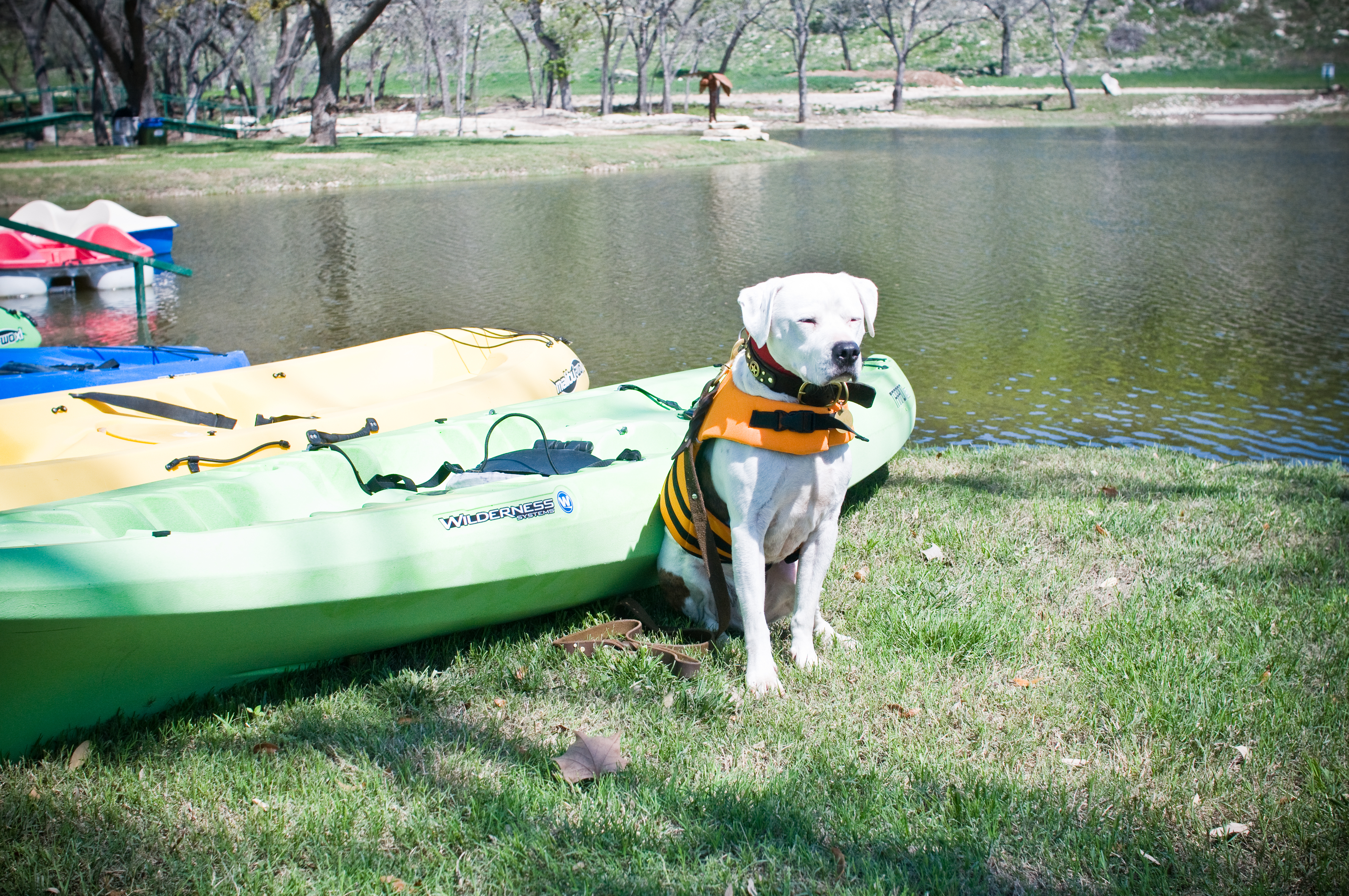
TRUE. The Dude was pretty skeptical of the lake at first, but when he went for a stroll with his daddy to watch the kayakers, he bravely started to investigate from a safe distance. That safe distance got shorter and shorter until he was in up to his toes . . . then to his knees . . . then to his chest . . . and then he was swimming! He went kayaking too, and even jumped off the boat for a swim, paddling alonside the kayak all the way to shore. What a brave boy.

(b) Chick had so much fun on Friday that he had to stay in most of Saturday to nurse his fun-hangover;

TRUE. As you may recall, Chick and mama went out to camp early, so Chick had a whole day of fun before Dude and dad even got there. And Chick partied way too hard. On Friday he ran a Lure course (chasing a fake bunny that darts back and forth in a big loop on a giant field) and was the fastest dog of his session, he kayaked and swam and swam, he did some agility, learning to run the tunnels and chutes, ate a bunch of raw chicken bones and other treats offered by various trainers, and learned several new tricks. When Saturday morning at 4am came around, Chick re-deposited some of those snacks in a messy pile, and we knew he was in for a fun hangover. He spent most of Saturday cuddled up in his crate in our room while we worked with the Doodlebug. Poor Chick!

(c) For his kayak ride, Chick chose the standing “siren” pose at the front of the vessel;

TRUE. He wasn’t too sure about the kayak at first, but once on, he took to it like a fish to water. He didn’t just do the “siren” pose — he tried all the other ones, too. He started out curled up in mom’s lap, then sitting facing mom and laying facing mom, then finally sitting facing the front of the kayak and standing on the mast in a proud siren position.

(d) Doodlebug took his daddy on a pack hike with some other dogs and towed him up the mountain in a harness;

TRUE. While mama was helping Chick nurse his hangover in the shade, she sent the Dude and dad out on the same hike that she and Chick had done with the huskies on Thursday. There were eleven dogs hiking with their people, and the hike took them up onto a woodsy plateau overlooking the camp and surrounding natural area. The descent wasn’t extraordinarily tall –after all, this is Central Texas — but it was a steep, serious climb. Dad was doing his best to keep Doodlebug in a loose leash walking position, but it was obvious he wanted to go, go, go. So after a switch of equipment (to a pulling harness configuration and a waist belt), Dude was hike-joring (pulling dad up the mountain). He had great determination and did a fantastic job, even with all of the other dogs passing and being passed. Doodlebug was on a mission! At the end of the day, we had a very pooped Dude.

We’ve already ordered our own joring equipment so we can teach him to tow us while running up hills and also on our sailboat!

(e) Chick was nearly kidnapped by several other campers who fell in love with his dashing good looks and ample charms.

TRUE. This one is obvious, right? Everybody loves Chick, and we got zillions of compliments on his beautiful furs “His patches are so vibrant it looks like they are sewn on!” and his facial handsomeness “I love his squinty eyes” and his perfect physique “I would never guess he is nine!” and his charming demeanor “What a sweet baby!” plus the expected threats “I’m going to steal him when you aren’t watching.” Luckily we escaped all of his fans and stalkers at the end of the weekend, and Chick wound up safely home with us.

That’s right, we tricked you all — They’re all true!

Later this week we’ll tell you about the very special agility award that the Doodlebug won at camp. You won’t want to miss it!


Weekend in review: Chickerdoodle Camp!

Our weekend adventure was a blast, and the boys absolutely loved their summer camp experience, and they were totally pooped last night when we got home.

We’ll give a complete review tomorrow, but in the meantime, a little game: which of the following statements is NOT true?

(a) Doodlebug conquered his fear of water and learned to swim;

(b) Chick had so much fun on Friday that he had to stay in most of Saturday to nurse his fun-hangover;

(c) For his kayak ride, Chick chose the standing “siren” pose at the front of the vessel;

(d) Doodlebug took his daddy on a pack hike with some other dogs and towed him up the mountain in a harness;

(e) Chick was nearly kidnapped by several other campers who fell in love with his dashing good looks and ample charms.

Did I kayak or did I chicken out?

Was Dude man enough to go for a paddle?

Chix-a-Lot Friday: Chicken Camp!

Oh boy oh boy everybody, I’m having so much fun I’m almost too busy to even write to you today, but I’ll just make it a quickie!

Yesterday morning my mama and I embarked on a Great Big Weekend Adventure to Chicken Camp! Oh, I guess I mean Dog Camp . . .

Anyhow, I got to go on a great big car ride with my friends the huskies:

And I got to tease them a little about how many furs they have in this hot Texas weather (many too many if you ask me):

And then we got to go for a big long hike up and up and up and then down and down! After we were done with that, I helped my mama and my girlfriend her co-worker J set up the agility equipment. I mostly helped by climbing up onto the A-frame (it was all my own idea!!) to keep a better look-out for boogie-men and to test it out and make sure it was plenty sturdy for the agilidogs. And I’m happy to report: it was.

I was pretty tired after that, so mama let me hang out in the pavilion with some of the other dogs while she did some kind of kitchen-related work. I’m not sure what she was doing in there, but I had an epic nap in the shade with the cool lake breezes, and when she got back she had some raw chicken bones for me to chomp on. MMMMMM…

And then even though I was still pretty pooped out from all my hard work, mama and I played fetch and then went swimming together in the lake. We swam clear across from one side to the other, side by side just like the buddies that we are!

I know what you’re thinking: it can’t get any better than this, right? Well here’s the thing: it can! My dad and my Doodlebug get here tomorrow, and we get to keep partying all weekend long! We’re going to do hiking, swimming, kayaking, chasing real fake bunnies, agilidog work, and genius-dog obedience. Wahoo! And happy weekend, everyone!

Dude learning to have a ball

Now that Doodlebug’s leash has been cut loose and he’s allowed to run and play, we just have to teach him. Apparently, playing doesn’t quite come naturally to him, but he’s starting to get the hang of it.

What he likes most is tennis balls (especially the Kong squeaky ones), so we started there. Whenever we sense that he’s feeling a little energetic (which is not too often), we go and grab the ball, get him excited about it, and toss it a short distance or just offer it to him. If he puts it in his mouth, we praise, praise, praise and pet him until he drops it. The second it falls out of his mouth, we stand up and walk away, taking the toy with us. A couple of minutes later, we do it again. If he takes the ball, he gets lots of praise and petting. If he doesn’t, he doesn’t. It’s been slow going, but we are noticing some little changes — he will now hold the ball in his mouth for a full 30 seconds or so on occasion, and often brings it back over to us after retrieving it (instead of running off to his own corner to chew on it). Far from perfect, but he obviously is starting to understand the fun that a ball can be!

Message from a worm-free heart

Hey Chick, did you hear that?

“I hear something, Dude, but what is it? And where is it?”

“Well Chick, it’s a new sound . . . it kinda sounds like a worm-free heart beating, and saying . . . “

Go run and play, little Dude! You’re free at last!

School Days: Recall, sit/stay, and hand targeting

Gosh, week three of the Dude’s quest to become basically obedient is done — we’re halfway there! We covered a lot of ground in weeks one and two, and week three was no exception.

The poor little Bug was feeling a bit under-the-weather because we (stupidly?) stopped at the vet’s office on the way to the training center, and Dude has his booster shots, which made him a little drowsy, achy, and grumpy. Getting his attention was easy as always, but getting him excited to play with a toy — one of the fundamental pieces to our facility’s method for teaching a recall — was pretty much impossible. What can we say: sometimes the boy just doesn’t wanna party.

Sometimes I just don't wanna.

Nevertheless, Doodlebug performed well in class. We opened the session with our usual tiedown approach exercise (reinforcing the concept of relaxing for attention), and some basic leash walking. Once the dogs were focused and in “work” mode,  we moved on a few new skills.

First up was the basics of a good recall. We had previously noted that toy play was a building block for some other important behaviors — the recall is one of the biggest. While many training classes teach a recall with food, our center choses to use toys instead. The thinking is that any dog –except maybe a Lab– has the potential to get much more worked up and excited about a favorite toy than about even the most delicious treat. If we can build a positive association between the word “Come!” or “Here!” and a super fun, big party with an interactive toy game, we can develop a good recall that will call a dog off even a stinky squirrel carcass or a fun game of chase (the kind of activities that make a cube of cheese seem boring by comparison). The two-person exercise involved one person getting the dog into a great game of tug, keep-away, squeak the squeaker, or whatever gets the dog’s butt wagging, and the other person then dragging the dog away by a long line. Once the second person had gotten an appropriate distance away, person 1 (with the toys) was to call the dog (“Doodlebug, come!!”) and start waving around the toy and praising the dog excitedly. Although getting the Dude excited to play when he was feeling icky was a challenge, he did manage to run to the right person each time. Way to go, Dude!

Next, we worked on a sit/stay. This involves counting out treats, asking the dog for a sit, then praising and offering a treat every few seconds while he holds the sit, continuing for a full minute. As it becomes easier for the dog to hold the sit between treats, the amount of time between treats is doubled (so the number of treats is halved). In between the “sit” minutes, the dogs were walked around for two minutes to give them a break. Dude did well with this, but because he’s not super foodie, our progression from treats every 5 seconds to treats only after a minute has been slow — we only made it to 20 seconds over the course of the week.

Finally, we worked on hand targeting — the skill where the dog bumps the back of the person’s hand with his nose, and receives a treat or piece of kibble in return. The hand target is useful for moving a dog around (for example, from one side to another during leash walking), or for teaching advanced behaviors like dancing, turning lights on/off, etc. It’s also helpful for nervous or reactive dogs, as a reminder to them to keep moving or turn their face away when they’re not sure what to do. The Dude was a total pro at this, since we had been practicing at home.

Homework was as follows:

1. Practice the recall using toys and a second handler, increasing distance as the current distance becomes easy. To be honest about our failure, we pretty much skipped this one. Because of the Duder’s heartworms and his general allergy-related lethargy (more on this another day), his play drive has not been in full-gear, so we thought we’d give him a pass until he’s on the up-and-up — hopefully soon!

2. Sit/stay: Practice the sit/stay using the method described above, doubling the time between treats as it becomes easy. The goal is to get to a full minute sit between treats. We did well with this one, though we’re not at a full minute yet — we got to about 20 seconds without any trouble, and we’re continuing to work. Our trainer calls this the “lazy-man’s dog training,” so we’re naturals!

3. Practice hand-targeting, first throughout the house, then in increasingly challenging locations — in the back yard, the front yard, on walks, etc. We’ve been having fun with this one, and have been using it on walks when there are small distractions present, to draw Dude’s attention away. Far from perfect, but we’re doing pretty well!

4. Walking: loose leash walking continues to be a project. Early in the week, I realized that while Dude was able to stick by me for the most part, he wasn’t really *with* me — he was never checking in and quick to wander off in a different direction. Leash-walking would ideally be taught using only emotion and fun (and not food), but some dogs just need a little more. So I started bringing a treat pouch full of kibble for our practice sessions, and offering him a piece whenever he looked up at me. Magically, he started to check in more and more. Toward the end of the week, we felt like we were really getting somewhere. Distractions are still a problem, but we are confident that with time, Dude will be able to walk right past a person and dog without getting so very excited — or at least, we hope so!

Our homework kept us busy, busy, busy this week, which is a good thing– most evenings, we had a very snoozy little Dude!

Sometimes training makes me so tired I have to tuck myself in.


Big day tomorrow!

Friends! We have an exciting announcement! Tomorrow is officially the end of the Dude’s 10 weeks of heartworm treatment. The boy is ready to party!

We’re not sure what we’ll do to celebrate, but the Dude has asked to be sent to Space Camp in Florida. While the jury is out on that one, we’ll play some good rowdy games in the back yard, go for a nice long walk, and do a lot of hanging out and complementing him on being so very, very cool.

Congrats, Dudarino!